Chapter 35
Dr. Mullis tossed a stack of papers he'd brought back from the conference onto the desk. The directors at Cetus looked at him in confusion.
“I found it!”
The Holy Grail of molecular biology.
***
This is Stanford's library.
In the meantime, the case report on Legionella had been successfully published in The Lancet.
It had been incredibly fast. Since a new bacterium and disease had been discovered, surely no one should die because publication of the paper was delayed.
This was my ninth paper in Nature or The Lancet since enrolling. And I was still writing more.
I was writing a paper proposing the basic principles and potential of the PCR machine.
A short letter should be enough, right?
First, I'd look up the existing literature.
There had to be a paper on DNA-synthesizing enzymes from archaea that could withstand high temperatures. I searched through Stanford's stacks.
The paper Dr. Mullis was looking for……
Oh, here it is.
<DNA-Synthesizing Enzyme Isolated from Extremely Thermophilic Bacteria. 1976, Alice Chen et al.>
I scratched my head. This was the enzyme Dr. Mullis was looking for. The paper had been written last year.
The silver bullet the Cetus researchers had been searching for was an enzyme that had already been successfully isolated.
Dr. Mullis will be pleased.
It was a little ironic.
Dr. Chen probably had no idea this research would change the history of molecular biology. She must have thought she was just studying a somewhat unusual bacterium, right?
I picked up my pen.
<Specific Amplification of Genes In Vitro Using an Archaeal Enzyme: A Reductionist Approach>
That was the paper I'd agreed to write with Dr. Mullis. I only had a few paragraphs so far. What should I write to earn a reputation for good work?
As I racked my brain,
a cup of coffee appeared beside me. I looked up to find Alice watching me, holding a cup of coffee herself.
“Long time no see?”
“Hi.”
Alice set down her book and bustled over to sit beside me. It was a thick internal medicine textbook.
She slid the coffee toward me.
“Here's your coffee.”
“Oh, thanks.”
She was wearing the coat she'd come straight from the hospital in, along with a light blue blouse and khaki pants. Her green eyes were half-lidded with fatigue.
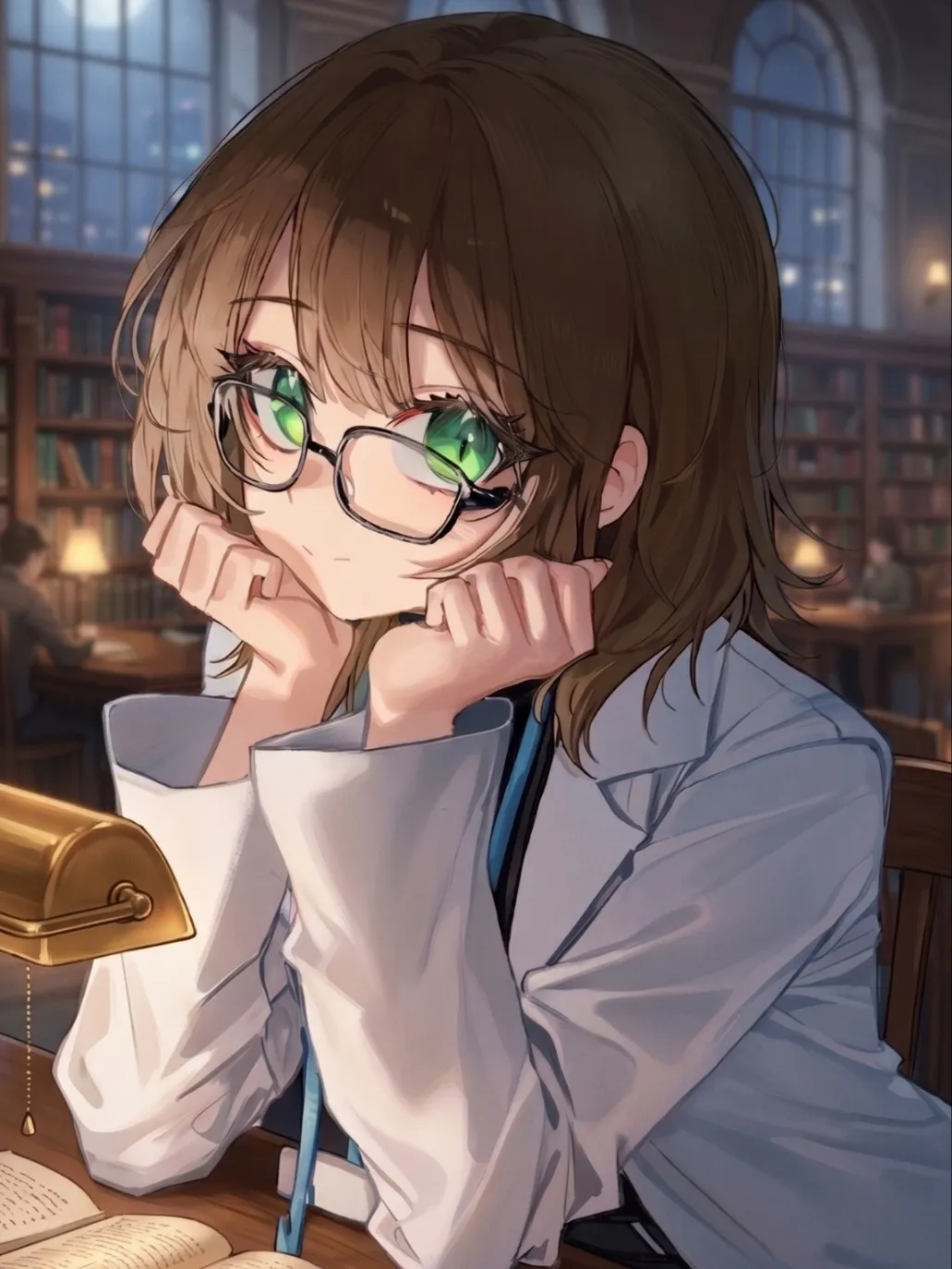
“I heard you went to a conference recently?”
I nodded.
“I went to hear about research into gene synthesis. There was a new technique discovered recently.”
I showed Alice the title of the paper I'd been looking at. By coincidence, the author of this paper was also named Alice.
Alice tilted her head.
“Oh.”
She seemed to be wondering what rare bacteria living in hot springs had to do with medicine.
“I'm getting ready to present my next paper.”
Alice took a sip of coffee.
She must have gotten off work early today. Or maybe they'd let her take a break to study.
“What paper?”
“I heard some new infection guidelines came out. It's nothing major. I do want to get it done quickly, though……”
Alice sat there, fiddling with her pen.
“Let's finish up quickly and go have some fun.”
Stanford's library was noisy. There were plenty of people discussing things, and plenty of students who'd just come to chat. I flipped through a few more papers.
There were three reduction steps, right?
Alice looked at the paper I was reading, then tilted her head again, as if to ask what it was.
“Wait, but... are you writing another paper?”
I nodded, and Alice clicked her tongue in disbelief.
“Yeah.”
“Wow. How often do you write papers, anyway? There can't be many people who read as much as you do, let alone write.”
Fair enough.
“I deliberately stick to topics I can write up and submit as quickly as possible. Things like hypotheses about how a particular disease works, or case reports.”
I made a point of avoiding complicated statistical questions that required long-term observation, or research papers involving experiments that took a long time.
You could write up a case report based on treatment you'd actually given, and with a hypothesis about how something worked, you could just lay out what you already knew.
“That's true.”
Alice scratched her head.
“Ah, I wish I could finish my presentation soon and go have fun. Do you have any plans for the end of the year?”
“Nothing in particular.”
“You're just going to hole up in some little room and write papers again. At least take a break at the end of the year.”
I turned to look at Alice.
“How did you know?”
“It's obvious. You've always been like that. Still, let's go somewhere for the holidays. Once I get the year-end presentation and everything else wrapped up.”
Alice smiled faintly.
***
That's true. The end of the year was already just around the corner.
And with it came Christmas, America's most important holiday.
It was the time of year when calls from home became frequent. The time when my family kept pressing me about my plans for Christmas and the New Year.
This year was no different. I answered a call from home.
I knew what this was about. When was I coming home for Christmas?
They'd prepared food, and a whole lot of family and friends would be coming over. It would be a conversation along those lines. My mother's voice came through the phone.
“Yes. I'm on call on Christmas Day.”
“Then when are you coming home?”
“I'll come the next day. That's how my schedule worked out.”
My mother muttered something about how even hospital workers should get holidays, and how doctors had human rights, too.
Who knows.
What could you do when people all got sick on their days off? I sighed.
On the Fourth of July, when Americans set off a lot of fireworks, dozens of people would flood into the hospital after blowing off their fingers with them.
I'd seen it happen plenty of times.
No matter how many times the news warned people to be careful with fireworks, not to use strange ones, and not to use big ones, the same thing happened every year.
Christmas was similar.
Around Christmas, people would drink or try new foods, have an allergic reaction and collapse, then flood into the emergency room……
If anything, it was busier than usual.
“Honestly. Is someone going to die if you don't go to work?”
Yes. They might. It was obvious, but I didn't bother saying it.
“I'll get there as soon as I can.”
“Then you won't make it to the family gathering.”
“I can't come on Christmas Day.”
I heard a sigh through the phone.
Our dog must have been sitting next to the phone, because I heard it bark behind my mother's voice. It must have been listening to me.
“Oh, right. I'll let you talk to him.”
“What?”
There was a brief rustling sound. Then loud barking came through the phone.
Our dog barked into the phone as if it were trying to say something. Maybe it was telling me to hurry home. That was probably the only thing a dog could say.
“Ah……. You doing okay? I'll be there soon.”
Woof, woof. The call ended like that.
I did need to go home, though.
I let out a small sigh. In any case, I'd have to be at the hospital on Christmas Day. I did want to get home soon.
***
And so, time passed.
Christmas Day.
As expected, the hospital was incredibly busy.
The city outside was in the middle of celebrating. Stanford Hospital had a bit of a Christmas atmosphere, too, but a hospital was still a hospital.
No matter the season, there were always sick people in the hospital, and there were always people dying.
The hours flew by.
It's going to be a busy day.
I sighed to myself and opened the emergency room door. Well, putting that aside, how would someone feel about coming to the ER on a day like this?
They must be distraught.
Patients were already starting to pour in.
“Doctor! Code blue!”
It meant a patient was in cardiac arrest. Naturally, a lot of the medical staff had taken Christmas off, so we were short on doctors today.
I ran to the emergency room. A few nurses were performing CPR on a patient.
I hope I'm not too late.
At least CPR had already started. That was a relief. I turned toward the ER station.
“Epinephrine. Defibrillator. Oxygen tank.”
The nurses scattered to gather the supplies as soon as they heard me. They were getting everything ready.
I ran straight to the patient lying there. The instant I saw the patient's face, I felt briefly as if I'd been struck on the head with a hammer.
Ah……
There are some kinds of patients you never get used to.
Everyone dies someday.
That was an unchanging fact. Doctors who often saw serious illnesses had no choice but to become somewhat accustomed to it. But I could never get used to patients younger than me, no matter how many I saw.
Maybe the patient was a college student from a nearby school, or maybe they'd collapsed at a Christmas gathering.
I felt sick. I tried not to imagine what the patient had been doing before being brought in, or who their family was.
Anyway.
I had to stay calm and assess the situation.
Fortunately, we hadn't missed the window to resuscitate. It seemed the cardiac arrest had happened after the patient arrived in the ER.
The epinephrine syringe was ready, and the oxygen mask was in place. Their oxygen saturation was 80 percent, and resuscitation was still possible.
The ECG……
A textbook myocardial infarction ECG.
I wondered why someone this young had suffered a typical heart attack, but that was something to worry about after we brought them back.
The epinephrine had been administered.
I stood in front of the patient, holding the defibrillator.
CPR was still underway.
“ECG……. Pulseless ventricular tachycardia. I'll defibrillate at 200 joules.”
Beep-
The defibrillator was charging. I pressed the paddles against the patient's chest.
“Clear.”
Thump!
If I could just get their heart beating again, I could save them.